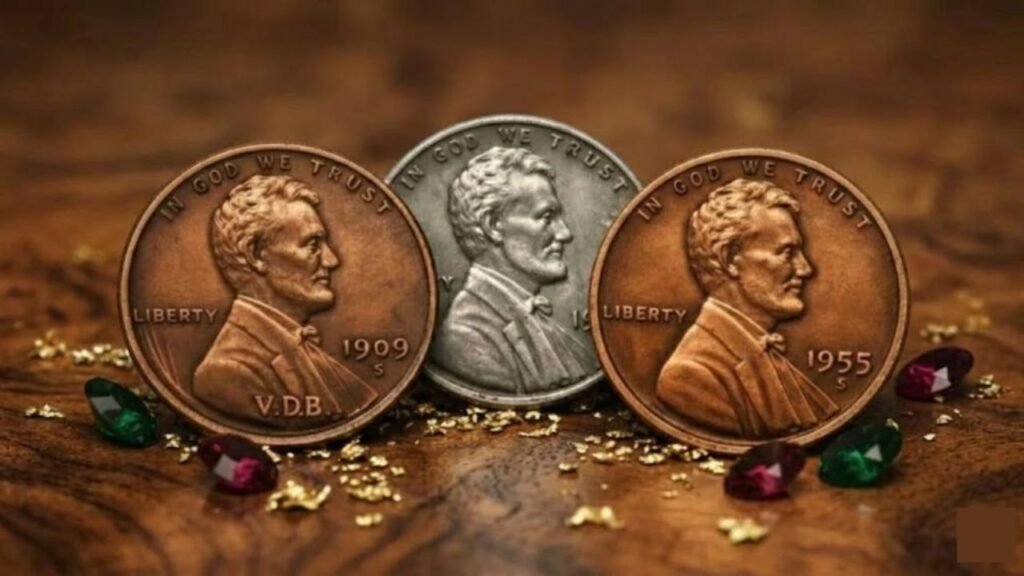
Hey there, future coin collector! Have you ever wondered if the loose change in your pocket could be worth a fortune? Well, get ready to be amazed because some old Wheat Pennies are selling for millions of dollars in 2026. That’s right – a single penny could buy you a mansion, a sports car collection, or even pay for your college and still have money left over! The Wheat Penny was made from 1909 all the way until 1958. It’s called “Wheat” because the back side shows two pretty wheat stalks. On the front is Abraham Lincoln, looking serious as always. These coins aren’t just money – they’re little pieces of American history that fit in your palm. While most are only worth one cent, a few special ones have become super valuable treasures. Rare Wheat Pennies Worth Millions Complete Collector’s Guide 2026
How to Spot a Wheat Penny (And Why They’re So Cool)
Before you start searching, you need to know what to look for. Wheat Pennies are easy to recognize once you know the basics. They’re made mostly of copper, which gives them that warm, reddish-brown color you probably remember from old movies.
| Feature | Details |
|---|---|
| Years Made | 1909 to 1958 |
| Metal Content | 95% copper, 5% tin and zinc |
| Weight | 3.11 grams (about as heavy as a paperclip) |
| Size | 19 millimeters across |
| Front Design | Abraham Lincoln’s portrait |
| Back Design | Two wheat stalks with “One Cent” in the middle |
| Mint Marks | None (Philadelphia), D (Denver), S (San Francisco) |
| Special Feature | First U.S. coin with a real person’s picture |
The Million-Dollar Pennies You Need to Know About
Okay, here’s where things get crazy. Some Wheat Pennies are worth more than most people earn in their entire lifetime. Check out this table of the most valuable ones. Remember, these are 2026 prices, so they might be even higher by the time you read this!
| Rank | Year & Mint | What Makes It Special | Value in 2026 |
|---|---|---|---|
| 1 | 1943 Copper | Made on copper by mistake (should be steel) | $75,000,000 |
| 2 | 1909-S VDB | Only 484,000 made, has designer’s initials | $50,000–$500,000 |
| 3 | 1914-D | Super rare Denver coin | $20,000–$250,000 |
| 4 | 1922 No D | Missing mint mark error | $10,000–$200,000 |
| 5 | 1931-S | Very few were made in San Francisco | $5,000–$100,000 |
| 6 | 1955 Doubled Die | Letters look blurry and doubled | $25,000–$200,000 |
| 7 | 1926-S | Hard to find in good condition | $5,000–$75,000 |
| 8 | 1944 Steel | Made on steel by mistake (should be copper) | $50,000–$1,000,000 |
| 9 | 1917 Doubled Die | Another cool error coin | $5,000–$50,000 |
| 10 | 1909-S | First year, San Francisco made | $3,000–$50,000 |
The King of All Pennies: The 1943 Copper
Let’s talk about the absolute rockstar of Wheat Pennies – the 1943 Copper. During World War II, the U.S. Mint needed copper for war stuff, so they made pennies from steel coated with zinc. But somehow, a few copper blanks got mixed in with the steel ones, and BAM! A super rare error was born. Only about 10 to 15 of these exist today. One sold for $1.7 million at auction, and now experts say it could be worth $75 million. That’s insane, right? Imagine finding one of these in your grandpa’s old coin jar. You could literally buy an island!
Collector Tips for Finding Hidden Treasure
Want to start your own Wheat Penny hunt? Here’s some advice that might help you strike it rich:
- Check every old penny you find – Look at the date first. Anything 1958 or older could be a Wheat Penny
- Learn the errors – Doubled letters, missing mint marks, and wrong metal types are your ticket to big money
- Don’t clean your coins! – Seriously, never clean them. Collectors want natural “patina,” not shiny cleaned coins
- Get a magnifying glass – Some errors are tiny and you need good light and magnification to spot them
- Store carefully – Use soft coin holders or albums, never just toss them in a drawer
- Look for VDB initials – On the back bottom edge of 1909 pennies, tiny letters “VDB” mean designer Victor David Brenner signed it
Frequently Asked Questions
Q: How can I tell if I have a real Wheat Penny?
A: Look at the back. If you see two wheat stalks with “ONE CENT” between them, and the date is 1958 or older, congratulations – you’ve got a Wheat Penny!
Q: My Wheat Penny is all dark and dirty. Should I clean it?
A: No way! Never clean old coins. Cleaning actually destroys their value. Collectors want them exactly how they were found. Even dipping them in vinegar ruins everything.
Q: What’s the easiest valuable Wheat Penny to find?
A: The 1955 Doubled Die is famous, but super rare. For beginners, look for 1909-S, 1914-D, or 1931-S dates. Even common Wheat Pennies in perfect condition can be worth a few dollars.
Q: Where should I look for Wheat Pennies?
A: Check your parents’ or grandparents’ old coin jars, ask relatives if they have any old pennies, go to bank and ask for rolls of pennies (though it takes patience), or visit coin shops and flea markets.
Q: How do I know if my coin is valuable?
A: First, check the date and mint mark. Then look for errors with a magnifying glass. Finally, compare to online photos or take it to a coin dealer. For really old ones, professional grading is the way to go.
Q: What’s the difference between Philadelphia, Denver, and San Francisco coins?
A: Philadelphia coins have no mint mark (just the date), Denver coins have a small “D” under the date, and San Francisco coins have an “S”. Some mint marks are rarer than others, which affects value.
Why Wheat Pennies Still Matter in 2026
Here’s the cool thing about collecting Wheat Pennies – you’re not just saving money, you’re saving history. These little coins survived two world wars, the Great Depression, and decades of pocket change. Each one has a story. Maybe it bought bread in 1918 or candy in 1955. The market for Wheat Pennies is still going strong in 2026. People love them because they’re affordable for beginners but can be super valuable for serious collectors. Plus, with all the new error-detecting technology, collectors are finding varieties nobody noticed before.
Whether you’re hoping to find a million-dollar 1943 Copper or just want to start a cool hobby, Wheat Pennies are an awesome place to begin. They’re small enough to store easily, interesting enough to study for years, and valuable enough to make collecting totally worth it. So next time you see an old penny, take a second look. That little copper coin might just be your ticket to treasure hunting adventure. Happy collecting!